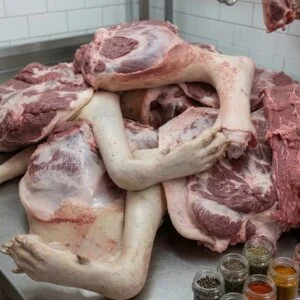
I went to the store and bought some b
I peeled open the bacon pack and my stomach turned.
Something was wrong. Very wrong.
Between the pink slices, a pale, solid chunk stared back at me like it didn’t belong to any living thing I knew.
For a second, I thought it might be… no, it couldn’t.
I stood there in the kitchen, paralyzed by a single, awful thought: what if this wasn’t even meat?
The texture looked dense and rubbery, the shape unnervingly precise, like a piece of something that had no business being inside food.
Every horror story I’d ever heard about factory processing and contamination flashed through my mind in a rush of panic and disgust.
Hours later, after searching photos, reading forums, and comparing cases, the truth felt strangely anticlimactic.
It wasn’t plastic, a parasite, or some unthinkable object.
It was cartilage, a chunk of connective tissue from the pig that slipped through during processing.
Still gross, but not dangerous.
The fear slowly gave way to a quieter, more unsettling realization: we rarely see how our food really looks.
Sometimes, the scariest part isn’t what’s in it—but how little we actually want to know.